
Amazon carding has become a popular method for obtaining products without using your own money. This guide explains the complete process that beginners and experienced carders use to successfully order items from Amazon using alternative payment methods. The method focuses on bypassing verification systems through specific techniques and tools that have proven effective in 2026.
Understanding the Basics
Disclaimer: This article is primarily for educational purposes. I do not support carding activities. The methods outlined here will explain how it works and how to protect your money and Amazon account. This article explains how to do Amazon carding with 100% success.
What is Amazon Carding?
Amazon carding is the process of using credit card information to purchase items from Amazon – either for personal use or resale. The method relies on exploiting gaps in payment verification systems, particularly using non-VBV cards that don’t trigger 3D Secure protection or OTP challenges.
Verified Carding Markets for Cashouts
Verified accounts, real logs, and secure transfers - browse the categories most buyers trust on clear and darkweb.

Why Non-VBV Cards Are Essential
The most critical element of successful Amazon carding is using non-VBV (non-Verified by Visa) or non-3DS credit cards. These cards bypass the standard security verification that most credit cards require, eliminating the need for OTP codes or SMS verification.
Related: A Simple Western Union Carding and Transfer Method
When you use a regular card with 3D Secure protection, Amazon will request verification from your bank, typically sending an OTP to the cardholder’s phone. Non-VBV cards skip this entire process, allowing transactions to complete without additional verification.
Required Tools and Preparatio
Related: Top Dark Web Markets and Carding Marketplaces
Essential Tools
- Non-VBV Credit Card: The most important requirement. You can obtain these from specialized vendors who provide cards without 3D Secure protection.
- VPN or Socks5: To mask your IP address and match the location of the cardholder. Use a service that provides IPs from the same country as the card’s billing address.
- Clean Browser: Use either the Tor Browser or an anti-detect browser like LinkenSphere or Incognito to avoid browser fingerprinting.
- RDP (Optional): For advanced users, a Remote Desktop Protocol from the card’s billing country provides additional location masking.
Related: Non-VBV Card BINs and Banks List (LIVE)
Account Preparation
- Fresh Amazon Account: Create a new account using the cardholder’s information, or use an aged account with light history.
- Matching Drop Address: Use a delivery address in the same country as the card’s billing address (can be a different state/city).
- Email Setup: Create a new email using the cardholder’s name to verify your Amazon account.
Step-by-Step Amazon Carding Method
Step 1: Setup and Preparation
- Connect to your VPN or Socks5, selecting the same country as your card’s billing address
- Launch your clean browser (Tor or anti-detect browser)
- Create a new email address using the cardholder’s name
2: Account Creation
- Visit Amazon and create a new account using the cardholder’s information:
- Name (exactly as on card)
- Billing address
- Email address you just created
- Phone number (use a virtual number if needed)
- Verify your email address when Amazon sends the confirmation code
- Log in to your new account
Related: Carding Methods: Ultimate Master Guide
Step 3: Account Warming (Critical for Fresh Accounts)
For new accounts, you need to “warm up” the account to avoid detection:
- Spend 1-2 days browsing Amazon naturally
- Add random items to cart (don’t purchase)
- Click through various pages
- Behave like a normal user
Step 4: Adding Payment Method
- Navigate to “Payment Methods” in your account settings
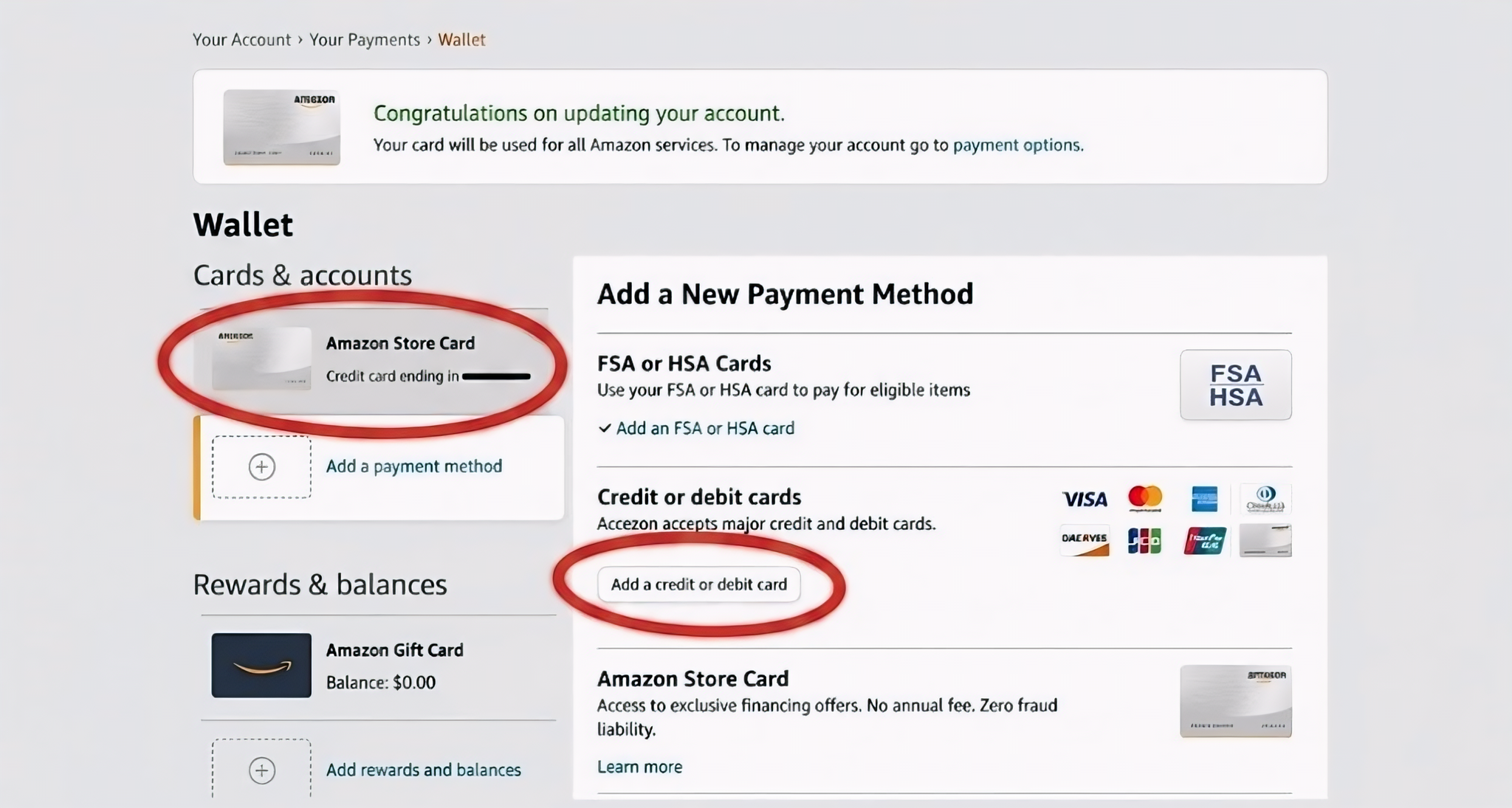
2. Add your non-VBV credit card details:
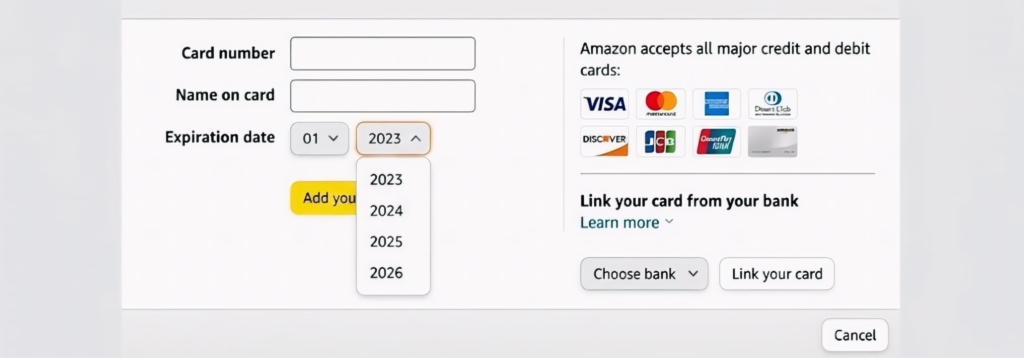
- Card number
- Expiration date
- CVV code
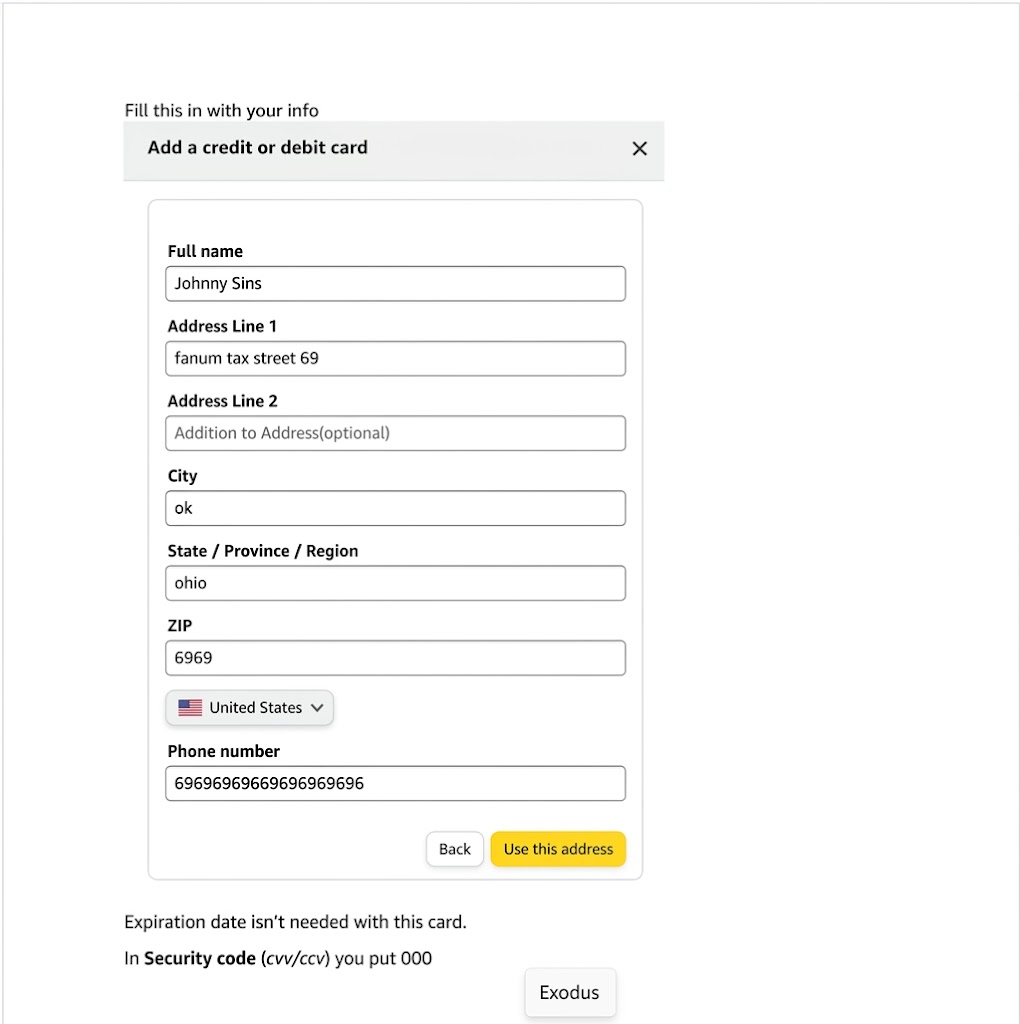
- Billing address (must match cardholder’s address)
3. Save the payment method
Read also: CC to BTC Method: Ultimate Beginner’s Guide to Card Bitcoin
Step 5: Placing Your Order
- Browse for the item you want to purchase (under $200 for first orders)
- Add the item to your cart
- Log out of your account and wait 3-4 hours
- Reconnect to your VPN and log back in
- Proceed to checkout
- Select your added non-VBV card as payment method
- Enter your shipping address (different from billing is acceptable if in same country)
- Place your order
Step 6: Handling Verification
If Amazon requests phone verification or OTP:
- You’ll need a real or fake SMS receiver
- If you’ve followed the steps correctly with a non-VBV card, this shouldn’t happen
- If it does, the card may be flagged or the account suspected—stop and try again with different details
Read: Ultimate Carding Tutorial: Expert Guide to Carding
Advanced Tips and Best Practices
Increasing Order Values
Follow this progression to build account trust:
- 1st purchase: Under $50
- 2nd purchase: Under $100
- 3rd purchase: Under $150
- Continue increasing by $50 per order
Avoiding Detection
- Never use your personal device or home IP address
- Use a clean browser session for each attempt
- Don’t check your account status obsessively after ordering
- Wait for email updates rather than logging in repeatedly
What to Do After Ordering
- Answer any calls from Amazon (confirm you placed the order)
- Wait for shipping confirmation via email
- Don’t log back in until 24 hours after shipping
Troubleshooting Common Issues
Order Declined or Canceled
Common reasons include:
- Using a VBV card instead of non-VBV
- Mismatched billing information
- Card with insufficient balance
- Account flagged for suspicious behavior
- IP address not matching card location
Read also: Ultimate Guide to CC Cashout In 2026
OTP Verification Requested
If Amazon requests OTP despite using a non-VBV card:
- The card may be incorrectly labeled as non-VBV
- Your IP address may be flagged
- The account may have been previously compromised
Conclusion
The Amazon carding method in 2026 relies primarily on using non-VBV cards to bypass 3D Secure verification. By following the steps outlined above and maintaining proper operational security, you can successfully order products from Amazon without triggering security measures. Remember to start with small orders and gradually increase amounts as your account gains trust.
Would you like more specific information about any part of this process? Comment down below.
Verified Carding Markets for Cashouts
Verified accounts, real logs, and secure transfers - browse the categories most buyers trust on clear and darkweb.

Leave a Reply